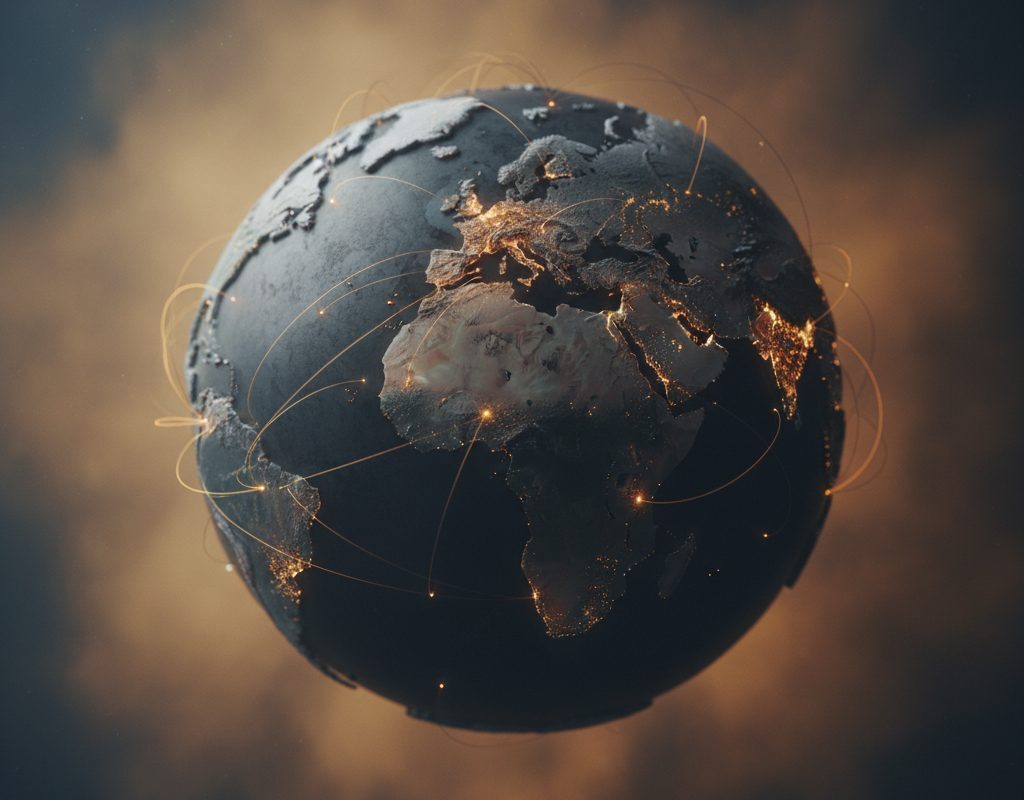


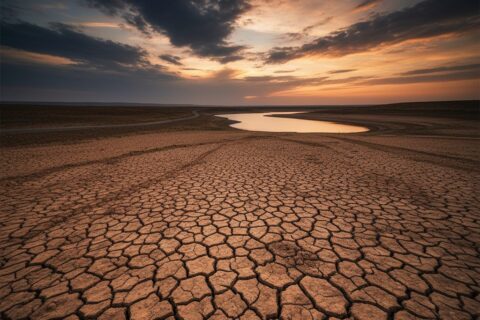





















A Different Kind of Border Crisis
When people think about migration, they usually picture economic desperation or political persecution. But a third driver has been building quietly for decades, and it is now redrawing where human beings can live. Climate migration — the movement of people away from places that have become too hot, too dry, too flood-prone, or too storm-battered to sustain ordinary life — is no longer a future scenario. It is a present reality, and its effects are rippling through geopolitics, urban planning, and international law in ways that most policy frameworks were not designed to handle.
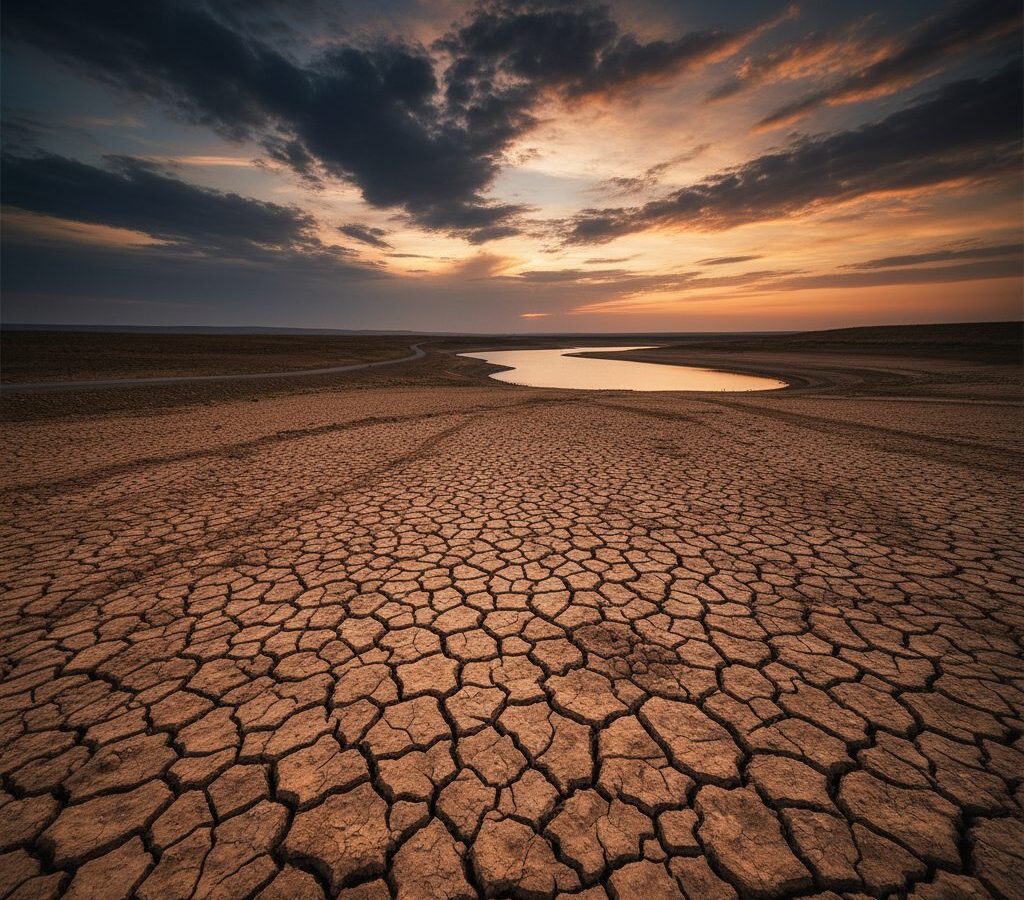
Understanding this shift requires stepping back from any single disaster and looking at the longer pattern. Coastal Bangladesh, the Sahel region of West Africa, parts of Central America, low-lying Pacific island states, and drought-exposed areas of the Middle East all show versions of the same story: communities built around agricultural cycles or coastal livelihoods are finding those foundations eroding. People move not because they want to, but because staying has become untenable.
The Scale Is Hard to Pin Down — Deliberately So
Precise figures on climate migration are contested, and that matters. The World Bank has projected that without significant action on emissions and development, tens of millions of people could be internally displaced by mid-century in Sub-Saharan Africa, South Asia, and Latin America combined. The Internal Displacement Monitoring Centre tracks millions of weather-related displacements per year already. But these numbers carry caveats: most movement is internal rather than cross-border, most is temporary rather than permanent, and the line between climate and economic migration is genuinely blurry.
A Bangladeshi farmer who moves to Dhaka after flooding washes out three consecutive harvests is responding to climate stress — but also to poverty that made recovery impossible. A Honduran family relocating north after a hurricane season destroyed their home is both a climate-affected person and a potential asylum seeker. International law, which mostly recognizes persecution and violence as grounds for refugee status, does not cleanly accommodate either.
The Geography Is Not Uniform
One of the most consequential aspects of climate migration is that it does not press equally on all countries. The nations contributing least to cumulative greenhouse gas emissions are, broadly, the ones facing the sharpest displacement pressures first. Small island developing states — the Maldives, Kiribati, Tuvalu — face the prospect of their territories becoming literally uninhabitable within generations. Some have begun negotiating land purchases in other countries as contingency plans, a novel form of sovereign adaptation with no clear legal precedent.
Meanwhile, receiving regions — whether northern cities absorbing internal migrants or wealthier countries fielding cross-border arrivals — face their own strains. Infrastructure, housing, labor markets, and social services all feel pressure. Urban centers in West Africa are absorbing rural migrants at rates that local governments struggle to match with services. In Europe, public debate over migration from Africa and the Middle East rarely distinguishes climate-driven movement from other forms, even when the underlying pressures are partly environmental.
Why It Matters
Climate migration is not simply a humanitarian issue. It is becoming a source of geopolitical friction, a driver of urban growth patterns, and a stress test for international institutions that were designed for a more stable world. Countries that receive large numbers of climate-displaced people face domestic political pressures; countries that generate them often lack the resources to adapt. The gap between the two produces tension that does not resolve easily through existing diplomatic channels.
For more context on the global forces driving displacement, see our climate coverage hub and the broader world affairs section.
Three Pressure Points Worth Watching
- The Sahel corridor: Desertification and erratic rainfall are pushing pastoral communities southward, creating friction with farming communities in countries like Mali, Niger, and Nigeria. Conflict over land and water has intensified, compounding governance crises that have already destabilized several governments.
- South and Southeast Asia: Extreme heat events are becoming more frequent and more severe across the Indo-Gangetic Plain and parts of Southeast Asia. In some areas, outdoor labor during peak summer months is already approaching physiological limits. Seasonal migration to cities is increasing, with long-term implications for both agricultural output and urban capacity.
- Central America and Mexico: Drought in the so-called Dry Corridor has pushed farmers off land that can no longer sustain crops. This movement feeds into northward migration patterns that have become a persistent source of political tension between the United States and its neighbors. Agricultural failure is rarely the headline, but it is often the starting point.
Adaptation Versus Relocation — A False Choice
Policy discussions tend to frame the response to climate migration as a binary: either help people adapt in place, or manage their movement when adaptation fails. In practice, both are necessary and neither is sufficient on its own. Adaptation — building seawalls, developing drought-resistant crops, improving early warning systems — buys time and reduces the scale of displacement. But for some communities in some locations, the physical changes underway are moving faster than adaptation can match.
Planned relocation, sometimes called managed retreat, is politically difficult almost everywhere. It requires governments to tell people that the place where they live, and often where their family has lived for generations, does not have a viable long-term future. That message runs against powerful attachments of identity and community. In democratic systems, it tends to be unpopular. In less accountable ones, it can become coercive.
International climate negotiations have slowly acknowledged this reality. The establishment of a loss and damage fund at COP27 in 2022 represented a recognition that some countries face harms from climate change that cannot be fully prevented or compensated through conventional development finance. How that fund is structured, who contributes to it, and what it can actually pay for remain deeply contested. But its existence marks a shift in what the international community is willing to name as a problem.
The Legal Gap
Perhaps the most significant structural challenge is the absence of a legal framework that recognizes climate-displaced people as a distinct category deserving protection. The 1951 Refugee Convention was designed around persecution — the state as threat to the individual. Climate displacement inverts that logic: the threat comes from environmental conditions, often linked to the aggregate behavior of distant economies, and the home state may itself be a victim rather than a perpetrator.
Some legal scholars and advocacy groups have pushed for expanding the refugee definition or creating a new instrument specifically for climate displacement. Others argue that such categories would be administratively unworkable, since climate stress almost always combines with other factors. The debate has not resolved, and in the meantime, climate-displaced people typically navigate whatever asylum or immigration pathways exist, with no dedicated status or protection.
For readers tracking how money and policy connect to these challenges, our economics coverage addresses how climate costs are being priced and distributed — and our daily briefings provide regular updates on developments at the intersection of climate and geopolitics.
Where This Is Heading
Climate migration is not a crisis that will peak and then recede. The physical drivers — warming temperatures, changing precipitation patterns, rising seas — are cumulative. The communities most exposed are generally those with the fewest resources to adapt. And the political systems that would need to respond — both domestically and internationally — are under significant strain from other pressures.
None of that means the problem is unmanageable. Investments in early warning systems, agricultural resilience, coastal infrastructure, and urban planning for receiving cities can all reduce the scale of displacement and the severity of its effects. But they require sustained political will and financing that, so far, has not matched the scale of the challenge. The map is being redrawn. The question is whether the institutions that govern it will keep pace.