

























Where Did All the Grown-Up Movies Go?
There used to be a comfortable middle ground in Hollywood. Not the superhero spectacle demanding a nine-figure production budget, and not the scrappy indie shot in someone’s apartment over a long weekend. Somewhere between those extremes lived a reliable category of film: the mid-budget drama, the adult thriller, the character-driven comedy that didn’t need a franchise to justify its existence. These were movies made for somewhere between fifteen and sixty million dollars, built around original ideas and movie stars, designed for audiences who wanted something to think about on the drive home.
That category has largely vanished. And its disappearance says something uncomfortable about what the film industry has decided audiences actually want — or, more precisely, what studios have decided they can afford to risk.
The Economics of the Squeeze
The math changed sometime in the last fifteen years. Streaming platforms upended the theatrical revenue model, ticket prices climbed while attendance plateaued, and the costs of marketing a wide release swelled to the point where a mid-budget movie needed to perform like a tentpole just to break even. The window between theatrical and home video collapsed. International markets, which once provided a cushion for modest domestic underperformers, grew increasingly hungry for action and spectacle that translated cleanly across language barriers.
Studios responded with what any rational business would do: they concentrated resources on the projects most likely to generate large, predictable returns. That meant franchises. Sequels. Intellectual property with built-in recognition. It meant betting on the sure thing, or at least the surest thing available in a business where nothing is actually sure.
The films that fell away weren’t bad films. Many of them were quite good. The mid-budget space produced some of the most praised American movies of previous decades — character studies, legal thrillers, romantic dramas that trusted audiences to follow complicated people through complicated situations. These films didn’t need to be the biggest movie of the summer. They just needed to find their audience.
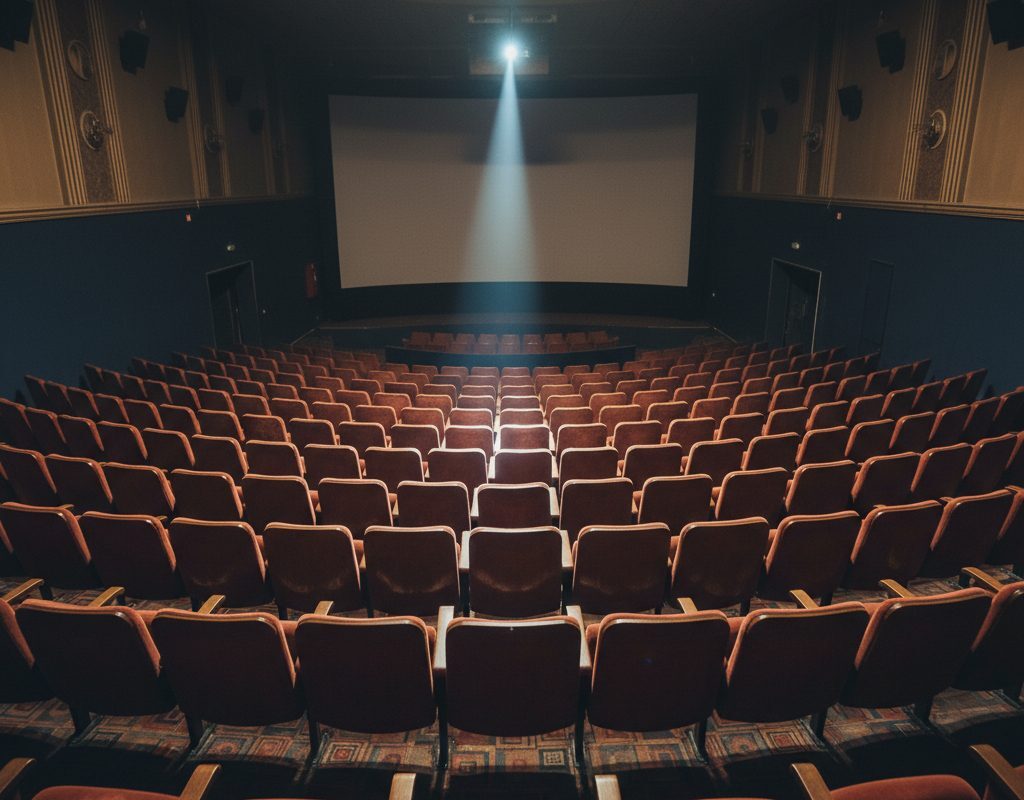
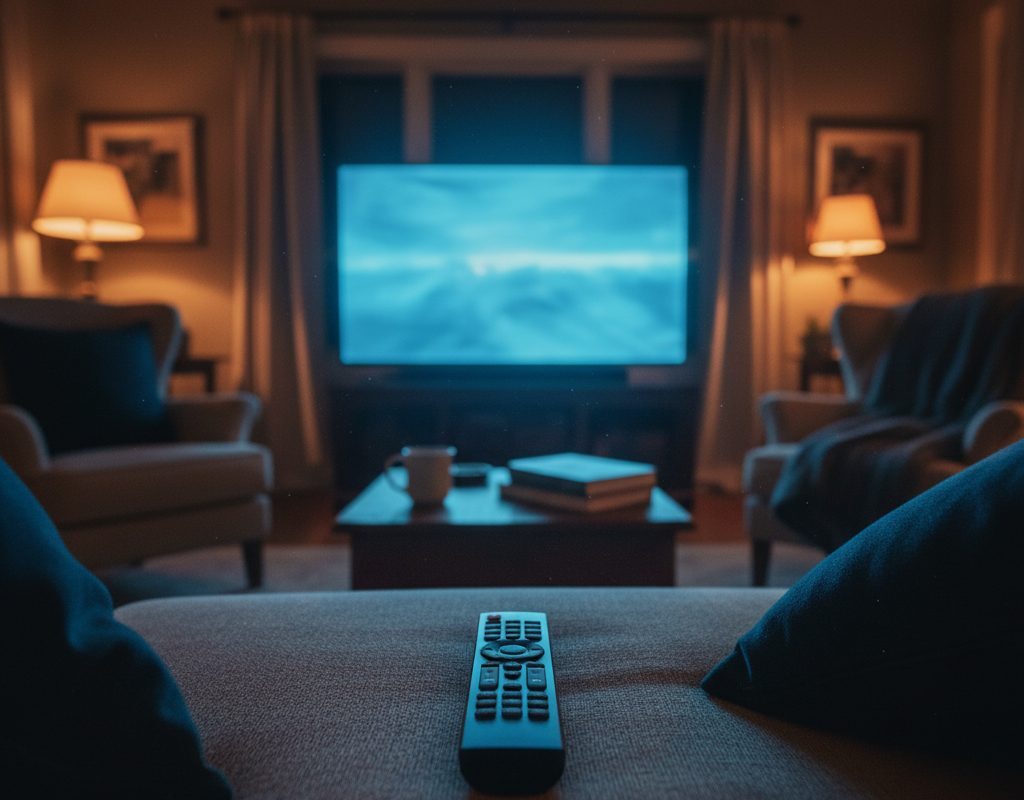
Finding that audience became the problem. Without a marketing budget to match the blockbusters, a mid-budget film could easily drown in the noise. And the audience that once reliably showed up for adult dramas — the over-thirty crowd that used to make a trip to the multiplex feel like a social occasion — had largely retreated to the couch.
What Streaming Promised and What It Delivered
When the major streaming services arrived, there was a hopeful argument that they would save the mid-budget film. The platforms needed content, they were spending generously, and they didn’t carry the same theatrical overhead. A movie that would have struggled to justify a wide release could find a global audience on a platform overnight.
For a while, that seemed to be working. Streaming services commissioned ambitious, expensive films with major stars and genuine artistic ambitions. Some of those movies were genuinely excellent. Critics celebrated the second coming of the adult drama, delivered directly to the living room.
But streaming economics have their own distortions. Platforms measure success in subscriber engagement and retention, not box office returns, and the metrics that matter to a subscription service don’t always reward the same qualities that make a film worth watching. A movie that generates intense conversation among a devoted audience may not move the numbers the way an endlessly watchable thriller does. The calculus is different, and it shapes what gets made.
There’s also the question of cultural weight. A film that opens in theaters, that has a Friday and a weekend gross and reviews that land before you’ve seen it, exists in the culture differently than one that appears on a platform and is algorithmically surfaced to some subscribers but not others. The theatrical experience — the shared anticipation, the communal viewing, the conversation that follows — has always been part of what made movies feel like events. Streaming delivers films; it doesn’t always deliver that feeling.
The Stars Who Used to Carry These Films
Mid-budget movies were always partly a star system. The movies worked because audiences trusted certain actors — trusted their choices, their instincts, their capacity to make a story feel real. Those stars operated as a kind of guarantee, a signal that the material was worth two hours of your evening.
That star power has been redistributed. The biggest names now attach themselves to franchises, where the money is substantially larger and the platform is substantially wider. Some of the most talented actors working in American film spend most of their time in costumes that require hours in a makeup chair to apply. Their actual acting — the face, the voice, the physical presence that made them compelling in the first place — is sometimes the least important thing about their performance.
Younger stars are being created inside the franchise system, which means they’re being asked to demonstrate charisma and likability before they’ve had the chance to do the complicated, unglamorous work that builds genuine range. The training ground that mid-budget films provided — the place where an actor could carry a story, handle ambiguity, navigate a role that didn’t come with a built-in mythology — has substantially shrunk.
Where the Films Have Gone
The mid-budget movie hasn’t entirely disappeared. It’s migrated. Some of it lives in prestige television, where the episode count allows for the kind of character development that a film used to do in two hours. Some of it lives in international cinema, which still produces thoughtful adult dramas in substantial numbers. Some of it lives at the edges of the streaming ecosystem, where smaller platforms and specialty distributors operate with less pressure to chase mass appeal.
A handful of filmmakers have found ways to keep making these films theatrically, usually by building audiences over time, by taking smaller fees, by working with studios willing to accept modest expectations. Their movies get made, and some of them are genuinely wonderful. But they feel like exceptions, and they are.
The losses accumulate. Not in any single season, but across years. Genres that used to support entire slates — the political thriller, the literary adaptation, the adult romantic comedy — have gone from reliable studio bets to occasional experiments. The multiplex that used to offer something for everyone now mostly offers different versions of the same thing.
- The adult drama has largely moved to streaming, where it reaches audiences but loses cultural mass.
- The theatrical comedy has nearly vanished as a major-studio priority.
- The prestige awards contender still exists but operates in an increasingly narrow lane.
- Original mid-budget action films — not superhero films, just thrillers with stakes — have become rare enough to feel noteworthy when they appear.
What Gets Lost
What gets lost is harder to quantify than a box office number. It’s a particular kind of conversation about adult life — about work and failure and love and consequence — that movies used to conduct with their audiences. Films have always been a way a culture talks to itself, and the specific register of the mid-budget drama was a kind of plain-spoken seriousness, an interest in the texture of ordinary experience that neither the superhero epic nor the indie micro-film quite replaced.
The people who made those films — directors, writers, character actors, cinematographers who excelled in intimate work — have had to find other venues for that work or have found themselves making different films entirely. Some of them are thriving. Some of them are waiting for the economics to shift back.
Whether they do depends partly on whether streaming platforms discover that audiences will pay for the kind of film they stopped going to the theater to see. It depends on whether theatrical exhibition finds a way to make itself essential again for something other than spectacle. It depends, ultimately, on whether there is still an appetite for movies that ask something of you.
The evidence suggests there is. The films that break through, that generate genuine word of mouth and sustained conversation, are often the ones that treat their audiences as intelligent adults. There may still be a business built around that. The industry is just not, at the moment, particularly interested in finding out.
For more on the state of contemporary film, visit our movies coverage, or browse the full watch section for reviews and features. For context on broader cultural shifts, see our culture coverage.